Remembering a girl before a case
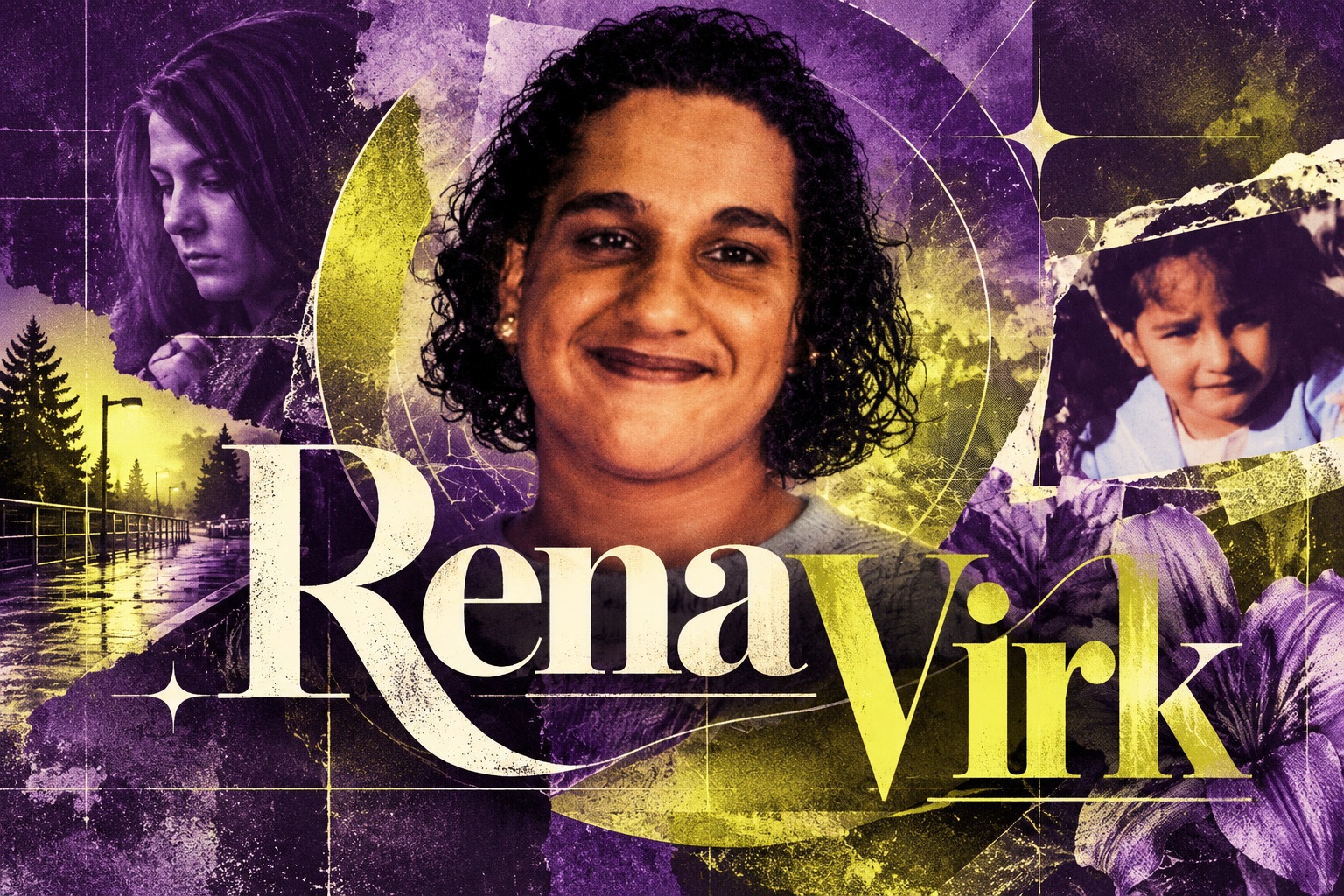
Rena Virk, more commonly recorded as Reena Virk, was born on March 10, 1983. She was 14 when she was killed in Saanich, British Columbia, on November 14, 1997. Her death became a national story about violence among teenagers, bullying, and exclusion. I begin with her age and name because the scale of the later case can make the young person at its center seem to disappear.
She was a student at Colquitz Junior High School. She wanted friendship and acceptance, ordinary wishes that should never have exposed her to fatal violence. A responsible account can discuss the difficulties surrounding her adolescence without suggesting that those difficulties made the outcome inevitable or placed responsibility on her.
Family faith and cultural background
Rena’s parents were Manjit and Suman Virk. Her father had immigrated from India, and her family was of South Asian background. Their Jehovah’s Witness faith added another dimension to their place within a community where many South Asian families were Sikh.
That combination has often been used to explain the family’s experience of difference. I find it useful as context, while keeping the limits of that explanation in view. Ethnicity and religion describe part of her social setting; they do not provide a complete account of her personality, family life, or every interaction with peers.
Rena experienced bullying connected with appearance, ethnicity, and social belonging. Her desire to fit in must be considered alongside the conduct of those who excluded or mistreated her. The responsibility for violence lies with the people who carried it out, not with a teenager’s wish to be included.
The events near Craigflower Bridge
On November 14, 1997, Rena went to a gathering near Craigflower Bridge. A group of teenagers assaulted her. After the initial attack, Kelly Ellard and Warren Glowatski were involved in the fatal violence that ended in her drowning.
Her body was found in the Gorge Waterway on November 22, eight days after her death. Those dates show the immediate sequence without requiring a graphic reconstruction of the injuries. I do not think the brutality of the case needs to be amplified through lurid detail to establish its seriousness.
The attack involved young people, and the resulting proceedings brought sustained attention to the capacity for severe violence within adolescent peer groups. The bridge became a recognizable location in the public account, but the deeper issue was the treatment of a girl seeking a place among others her age.
Different convictions in a long legal history
Six girls were convicted of assault in 1998. Their convictions concerned the initial group attack, while separate proceedings addressed the murder. Warren Glowatski was convicted of second degree murder in June 1999 and received a life sentence with parole eligibility after seven years.
Kelly Ellard’s legal history was more prolonged. An initial murder conviction in 2000 was overturned in 2003. A 2004 proceeding ended in a mistrial, and she was convicted again in 2005. That conviction was upheld by the Supreme Court of Canada in 2009.
I distinguish these steps because the phrase the murder trial can conceal a sequence lasting years. For Rena’s parents, public legal attention did not end with a single verdict. The case repeatedly returned to court and continued through later parole decisions.
Manjit Virk and a father’s account
Manjit became an advocate against bullying after his daughter’s death. In 2008, he published Reena: A Father’s Story, offering his perspective on her life and on the institutions involved in her care and the aftermath of her death.
His criticism included the British Columbia child welfare system and the justice system. The family’s pursuit of accountability also involved civil claims. These activities reflect a parent’s attempt to describe what happened and challenge perceived failures rather than allow the story to be defined entirely by the perpetrators.
My interest in the book’s place in the chronology is that it restored a clearly identified family voice. A father’s account cannot reverse a death, but it can insist that the child be remembered through more than the evidence introduced in criminal proceedings.
Suman Virk and the work of forgiveness
Suman Virk also became known for advocacy against bullying and for participating in restorative justice. She and Manjit took part in a process involving Glowatski that emphasized accountability, dialogue, and healing. Her willingness to forgive became one of the most widely discussed aspects of the family’s response.
The public account describes a mother who continued to live with her daughter’s loss while choosing a particular response to someone responsible for it. That choice does not mean other grieving families must follow the same route.
Suman died on June 24, 2018, at 58. Her remembrance included compassion and efforts to prevent bullying. Her death added another loss to a family already familiar with public mourning, while preserving the significance of the work she had undertaken during her life.
Later books television and renewed attention
Rebecca Godfrey’s book Under the Bridge appeared in 2005. A television adaptation released in 2024 brought the case to another audience. Such works can reopen discussion of youth violence, prejudice, and the treatment of people seeking social acceptance.
They are nevertheless adaptations, and I keep their dramatic choices separate from Rena’s actual biography. A performance or reconstructed scene can shape audience understanding without being a direct record of a family’s private experience.
Later developments have also concerned Ellard, now known as Kerry Sim, including the revocation of her day parole in July 2025. That is part of the continuing legal aftermath. It does not change the central dates of Rena’s life or replace the family’s advocacy as an important part of her remembrance.
FAQ
Why is her name also written Reena Virk?
Reena is the spelling most commonly used in accounts of the case, while Rena is the form used here for the requested profile. Both refer to the Canadian teenager born on March 10, 1983, and killed on November 14, 1997.
Who were her parents?
Her parents were Manjit and Suman Virk. They became advocates against bullying after her death. Manjit published Reena: A Father’s Story in 2008, and Suman became widely recognized for her compassionate participation in restorative justice before her death in 2018.
What does Under the Bridge have to do with her story?
Rebecca Godfrey’s 2005 book examined the case, and its 2024 television adaptation renewed public attention. The dramatic version should be distinguished from Rena’s documented life, the criminal proceedings, and her parents’ own accounts of their experience.


